 |
| Photo Credit: Pinterest |
 |
| Photo Credit: Wikimedia Commons |
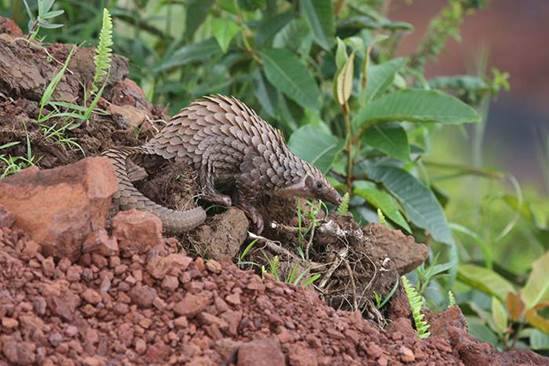
What is a pangolin you may be wondering? They are scaled mammals with a soft belly, that when threatened roll into an armored ball (Pangolin Facts...). This makes them easy targets for poachers who can just pick them right up. While they may look like lizards or armadillos, they are more closely related to your dog or cat than to reptiles and armadillos (Pangolin Facts...).
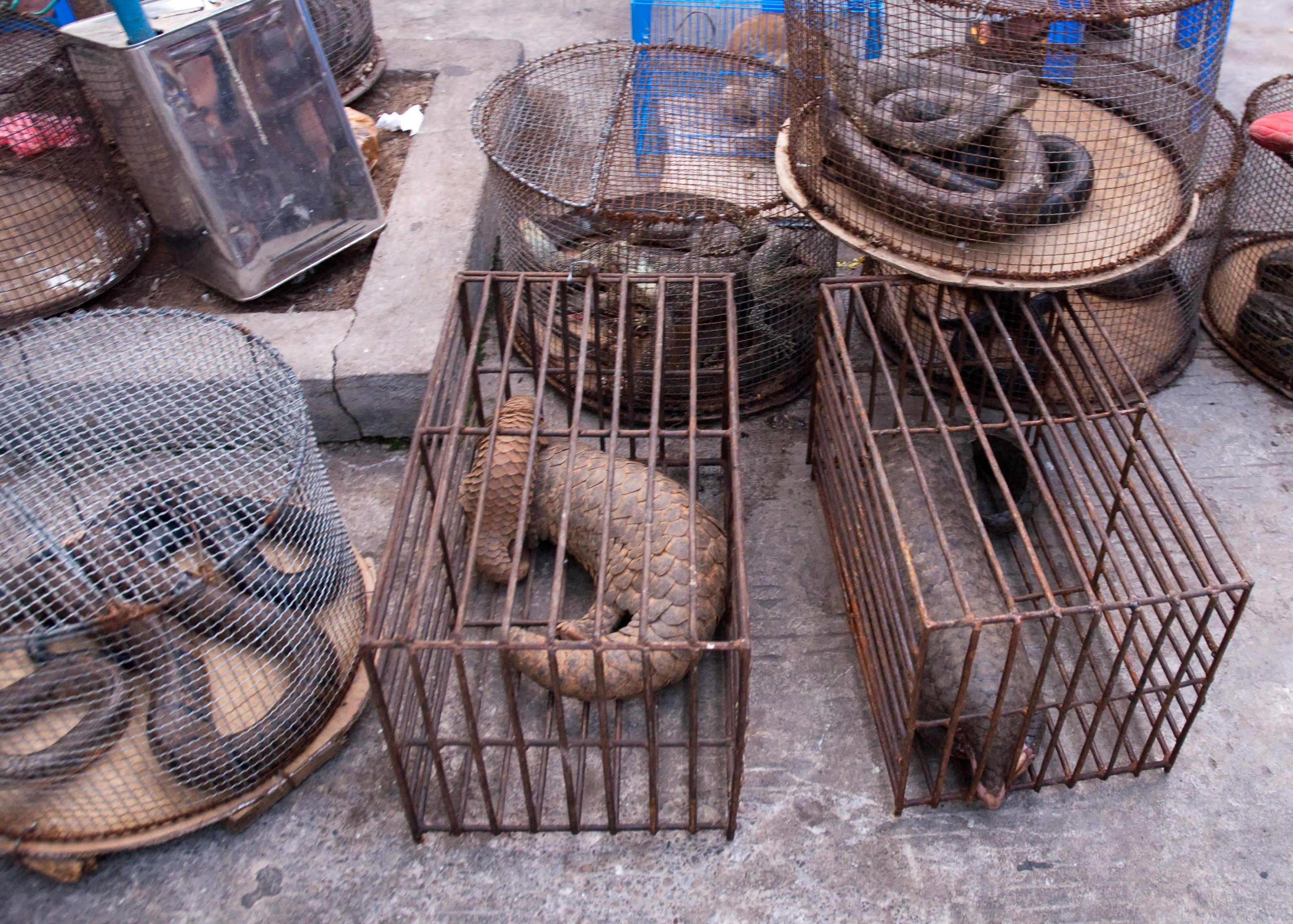
Pangolins are the most trafficked animals in the world, even though a large number of people don't even know what they are (Morris). As the demand and poaching of pangolins grow, their numbers dwindle. There are 8 different species of pangolin, all of which or deemed vulnerable to endangered (Pangolin). Two of these eight were named critically endangered by the IUCN and were added to their Red List of Threatened Species (Pangolin).
 |
| Photo Credit: Dan Bennett |
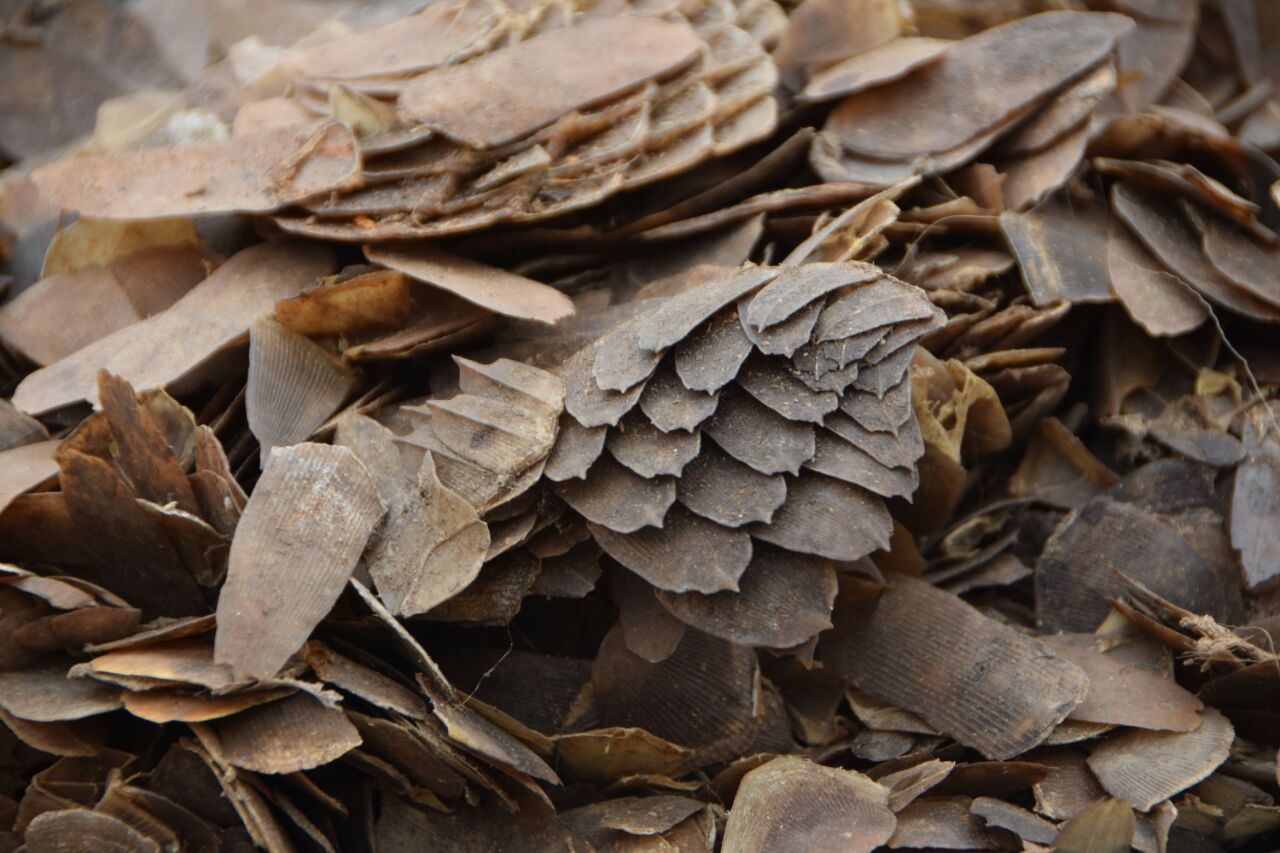
Between the years 2011 and 2013, through law enforcement busts alone, roughly 116,990 to 233,980 pangolins were estimated to have been killed for their scales and body parts (Pangolin). Given that only about 10% of trafficking is caught, the estimated total of pangolins killed is much higher (Pangolin). Between the years 2000 and 2013, around one million pangolins were poached and trafficked (Pangolin Facts...). As Jeff Flocken, the director of North America’s International Fund for Animal Welfare, states “The threat is significant and escalating, due to the high demand for consumption, they are disappearing,” (Qtd in Morris).
 |
| Photo Credit: Kenneth Cameron |
Pangolins are an important part of Asia and Africa’s ecology. They primarily eat termites and ants. This is helpful for local people, if there weren’t pangolins their farms and houses would be at risk of termite infestation. Unfortunately for the pangolin, this specific diet makes it hard to keep them in captivity or in sanctuaries.
Unfortunately, there isn’t much as an individual that we can do to help this problem, but by spreading awareness and speaking out against poaching and animal trafficking all around the world maybe we can start to make a difference. While there are laws in place perhaps there is more we can do to help these defenseless creators. We should remember the pangolin and the troubles they are facing to strengthen our defense against the poaching of other animals. Nobody knows how many pangolins are left in the wild, or how much longer they’ll be around. Let's not let this happen to any other animal, humanity doesn’t need the death of any more species on our hands. Remember the pangolin’s story and help contribute to a happy ending.
Works Cited
Bennett, Dan. Myanmar Illicit Endangered Wildlife Market. 18 Apr. 2008. Wikipedia, en.wikipedia.org/wiki/Pangolin_trade. Accessed 16 Dec. 2019.
Cameron, Kenneth. Confiscated pangolin scales set to be destroyed in Cameroon in 2017. 17 Feb. 2017. Wikipedia, en.wikipedia.org/wiki/Pangolin_trade#/media/File:Pangolin_scale_burn_in_Cameroon._Credit-_Kenneth_Cameron_-_USFWS_(2)_(32575640450).jpg. Accessed 16 Dec. 2019.
Ghana Pangolins. 18 Feb. 2017. Wikimedia Commons, commons.wikimedia.org/wiki/File:Ghana_Pangolins_USAmb_2017-02-18_B001.jpg. Accessed 16 Dec. 2019.
Morris, Lulu. "What is the World's Most Poached Animal?" National Geographic, 9 May 2017, www.nationalgeographic.com.au/animals/what-is-the-worlds-most-poached-animal.aspx. Accessed 16 Dec. 2019.
"Pangolin." World Wildlife Foundation, www.worldwildlife.org/species/pangolin#. Accessed 16 Dec. 2019.
"Pangolin Facts and Information." National Geographic, www.nationalgeographic.com/animals/mammals/group/pangolins/. Accessed 16 Dec. 2019.
Tree or African White-bellied Pangolin. Pinterest, www.pinterest.com/pin/219128338092774003/. Accessed 16 Dec. 2019.

This is so sad that these creatures are being killed for something they have no control over. I wonder why people think they have healing properties? Do you think these countries will make any regulations against this in the near future?
ReplyDeleteThe countries with high demand for the scales have a hard time making bans given the popularity. Most of them have created regulations to help prevent poaching but the majority of effort has come from the countries where the pangolins live. I'm not sure why they believe the scales have healing properties, but they have been supplied with evidence proving that they don't work, yet they still chose to use them anyway.
DeleteGood information, Bridget. Could there be a wildlife preserve for pangolins like there are for other animals in other parts of the world?
ReplyDeleteHello Bridget, I enjoyed reading your blog. Do you think to raise the punishment for people who are caught, could be a possible way of reducing the amount of poaching?
ReplyDelete